In this article
- What a Commercial Cleaning Checklist Should Include
- Commercial Cleaning Checklist: Daily, Weekly and Monthly Tasks
- Commercial Cleaning Checklist by Area
- Adjusting the Checklist for Your Type of Building
- NSW Rules Behind Your Commercial Cleaning Checklist
- 7 Essential Checks Before You Hand the Checklist to a Contractor
- Turning the Checklist into a Contract and Records
- How TNK Can Help
- Commercial Cleaning Checklist FAQs
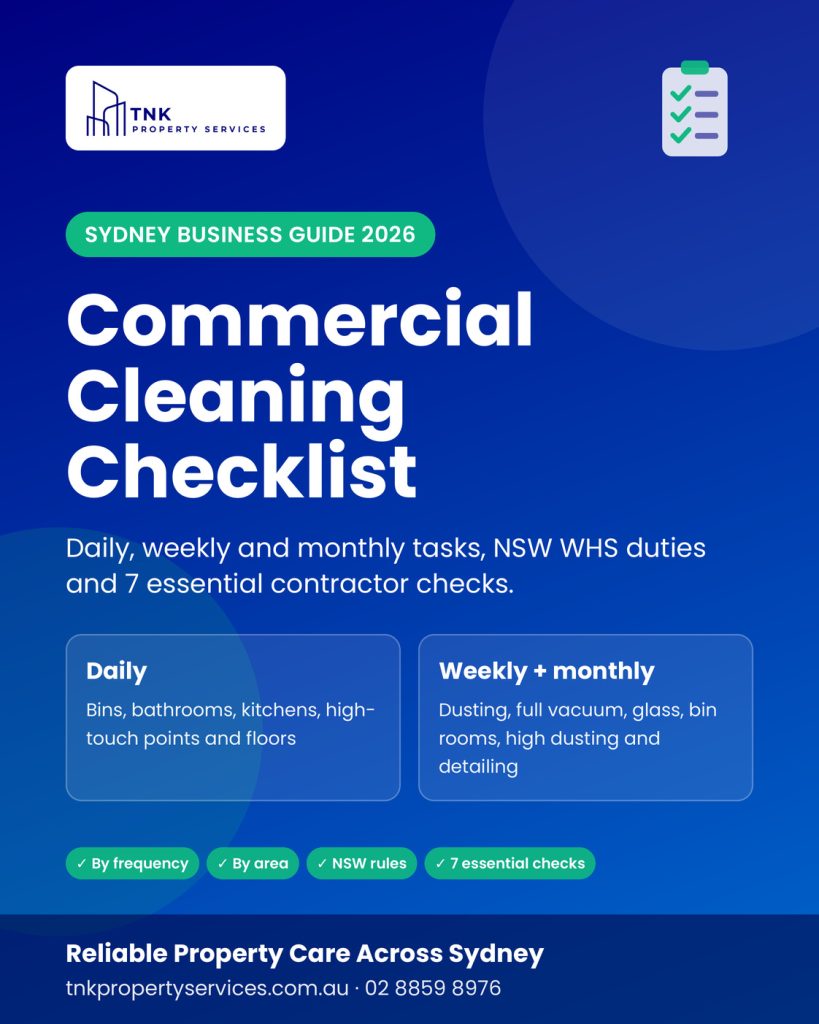
Quick answer: A commercial cleaning checklist is a written list of every cleaning task in your building, grouped by area and frequency: daily, weekly, monthly and periodic. A good commercial cleaning checklist covers entries, workspaces, kitchens, bathrooms, floors, bins and high-touch points, says who signs off each visit, and matches NSW work health and safety duties, which require workplace facilities to be kept clean, safe and in good working order. Use the schedule below as a starting point, then adjust it for your foot traffic, occupants and type of facility.
This guide is written for Sydney building owners, facility and property managers, business owners and strata managers who look after commercial or mixed-use buildings. It gives you a ready-to-use checklist, a frequency table, the NSW rules behind it and 7 essential checks before you hand the scope to a contractor.
You can copy this commercial cleaning checklist straight into your scope of works.
We are TNK Property Services, a family-owned, ISO 9001:2015 certified business based in Smithfield, with over a decade of looking after Sydney properties. Every site we take on for commercial cleaning in Sydney starts with a written schedule like the one below.
In this guide
- What a commercial cleaning checklist should include
- Daily, weekly and monthly checklist
- Checklist by area
- Adjusting the checklist for your type of building
- NSW rules behind the checklist
- 7 essential checks before you hand it to a contractor
- Turning the checklist into a contract and records
- How TNK can help
- FAQs
What a Commercial Cleaning Checklist Should Include
Most cleaning complaints come from one problem: nobody wrote down exactly what “clean” means for the building. The cleaner thinks the kitchen is done once the benches are wiped. The office manager expected the fridge and microwave too. A clear commercial cleaning checklist removes that guesswork for everyone.
At a minimum, your checklist should set out:
- Areas: every zone in the building, including the easy-to-forget ones such as fire stairs, plant rooms, loading docks and bin rooms.
- Tasks: specific, checkable actions (“empty and reline all bins”, not “tidy bins”).
- Frequency: daily, weekly, monthly, quarterly or annual for each task.
- Timing and access: after hours, early morning or during the day, plus keys, alarm codes and restricted areas.
- Products and consumables: who supplies soap, paper towel, toilet paper and bin liners, and any product restrictions.
- Standards and sign-off: how each visit is recorded and how issues are reported and fixed.
Write your commercial cleaning checklist so that a new cleaner on their first night could follow it without asking questions. If they could not, the checklist is not specific enough yet.
Commercial Cleaning Checklist: Daily, Weekly and Monthly Tasks
The table below is a typical commercial cleaning checklist for a Sydney office or mixed-use building. Treat the frequencies as indicative starting points, not legal minimums. Busy sites, shift work and sites with food handling or vulnerable occupants usually need more.
| Frequency | Typical tasks |
|---|---|
| Daily (each visit) | Empty and reline bins and recycling; clean and disinfect toilets, urinals, basins and taps; restock soap, paper towel and toilet paper; wipe kitchen benches, sinks and tables; wipe high-touch points (door handles, light switches, lift buttons, rails); vacuum high-traffic carpet; sweep and mop hard floors; spot clean entry glass |
| Weekly | Dust desks, shelves, sills and partitions; vacuum all carpeted areas; wipe kitchen appliances outside (microwave, fridge, dishwasher); clean internal glass and mirrors; wipe skirting and door frames in busy areas; clean bin rooms and bin bays |
| Monthly | High dusting (vents, ledges, light fittings within safe reach); clean inside fridges and microwaves by agreement; detail bathrooms (grout, partitions, dispensers); wash bins; clean fire stairs and landings; scrub hard floors in wet areas |
| Quarterly or six-monthly | Carpet steam cleaning in high-traffic areas; machine scrub and seal hard floors; external window cleaning; pressure clean entries, car parks and loading docks |
| Annually or as needed | Full carpet clean; upholstery cleaning; facade and high window cleaning; deep clean before a lease end or fit-out handover |
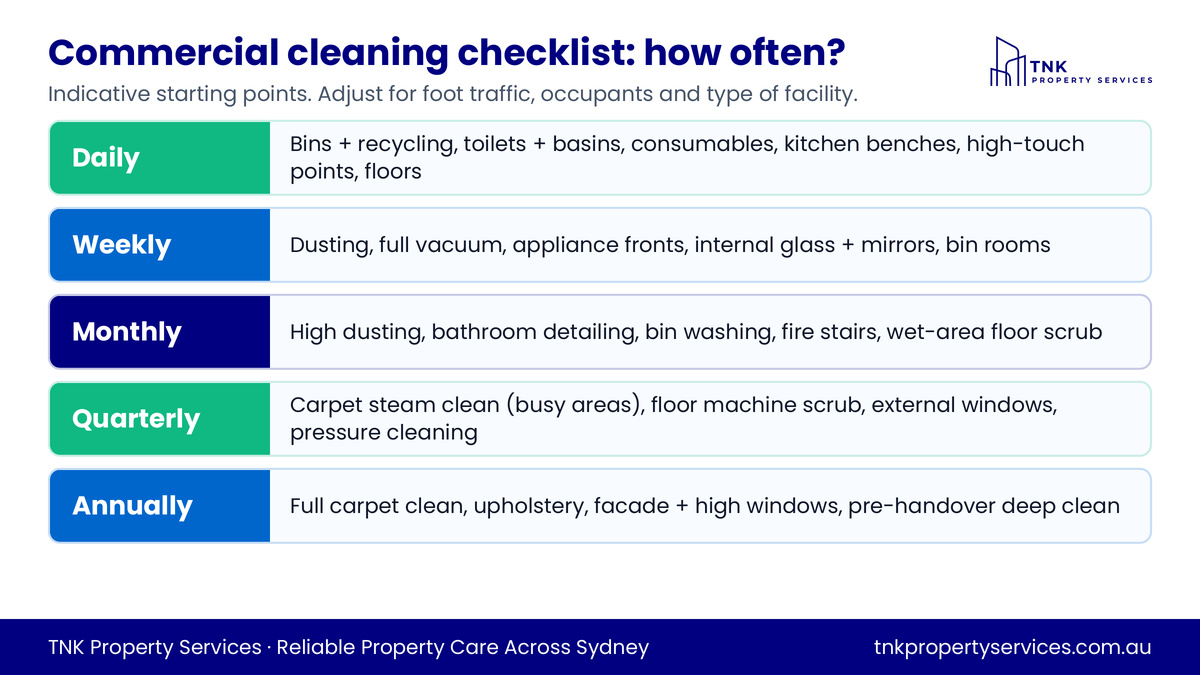
If your building has periodic work that needs specialist equipment, separate it from the routine clean so it is priced and scheduled properly. For example, commercial carpet cleaning and commercial window cleaning are usually booked as their own line items with a set frequency.
Commercial Cleaning Checklist by Area
A frequency table tells the cleaner when. An area-by-area commercial cleaning checklist tells them what “done” looks like. Use these lists as the backbone of your scope of works.
Entry, reception and lifts
- Entry mats vacuumed or shaken out, and entry glass spot cleaned
- Reception desk, seating and display surfaces dusted and wiped
- Lift buttons, rails and doors wiped; lift floors vacuumed or mopped
- Letterbox and directory areas dusted
Workspaces and meeting rooms
- Bins emptied and relined, recycling separated
- Clear desk surfaces wiped (cleaners should not move papers or equipment unless agreed)
- Phones, keyboards and shared screens wiped if included in the scope
- Meeting tables wiped and chairs straightened
- Carpet vacuumed and hard floors mopped
Kitchens and break rooms
- Benches, sinks, taps and splashbacks cleaned and sanitised
- Dishwasher loaded or unloaded if agreed
- Appliance fronts, handles and microwave interior wiped
- Tables and chairs wiped, floors mopped
- Fridge cleared and cleaned on an agreed day each month, with notice to staff
Bathrooms and amenities
- Toilets, urinals, seats and cisterns cleaned and disinfected
- Basins, taps, mirrors and dispensers cleaned
- Soap, paper towel and toilet paper restocked
- Sanitary bins checked (serviced by the agreed provider)
- Floors mopped with disinfectant; leaks, blockages or damage reported
Common areas, back of house and outside
- Corridors, fire stairs and landings swept or vacuumed; exits kept clear
- Bin rooms cleaned, bins rotated for collection and spills removed
- Loading docks and car parks swept, with periodic pressure washing
- Entry paths and forecourts kept free of litter and trip hazards
For mixed-use and residential buildings, the common-area items above overlap with a strata cleaning service. Our free strata cleaning checklist covers the residential side in more detail.
Adjusting the Checklist for Your Type of Building
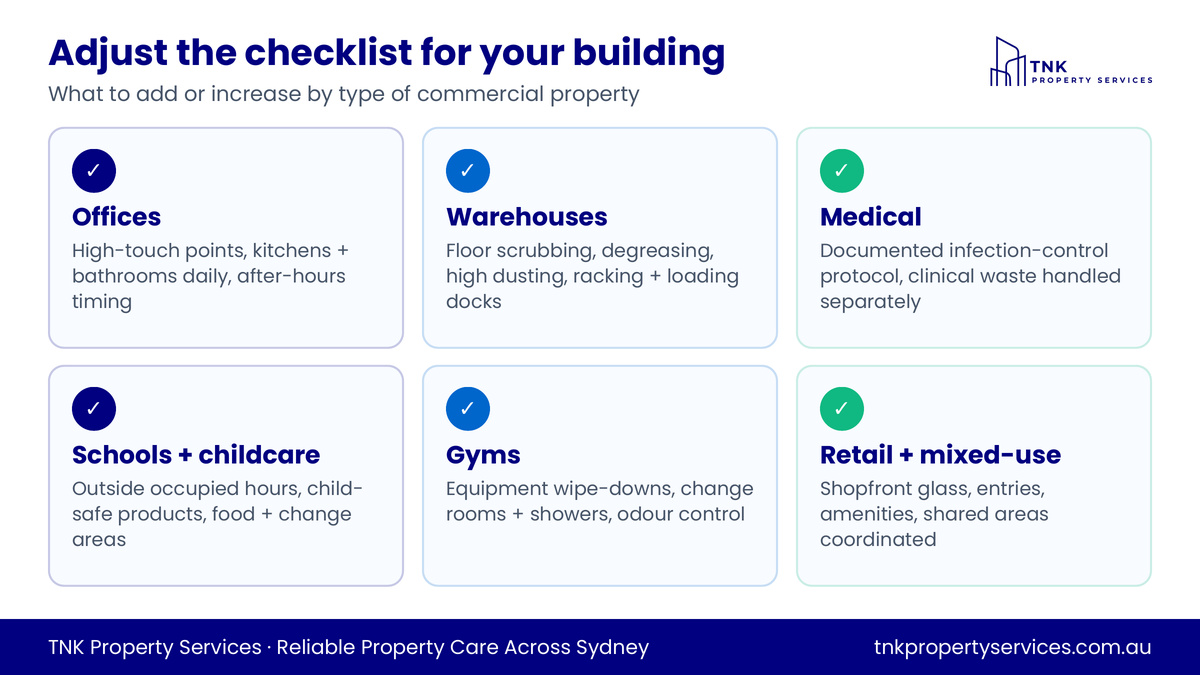
No single commercial cleaning checklist suits every property. The same floor area can need very different work depending on who uses it and what happens there.
| Building type | What to add or increase |
|---|---|
| Offices | High-touch points, kitchens and bathrooms daily; after-hours timing; clear rules about desks and equipment |
| Warehouses and industrial sites | Floor scrubbing, degreasing, high dusting, racking and loading docks; dust and forklift traffic considered in timing |
| Medical and allied health | Documented infection-control protocol; treatment rooms and high-touch surfaces; clinical waste handled separately by the right provider |
| Schools and childcare | Cleaning outside occupied hours; child-safe products; food prep and change areas disinfected daily |
| Gyms and fitness centres | Equipment wipe-downs, change rooms and showers; odour control; timing around peak hours |
| Retail and mixed-use | Shopfront glass, entries and amenities; shared areas coordinated with the strata or building manager |
Office tenancies usually work best with a dedicated office cleaning scope done after hours, so staff walk into a ready workplace. Industrial sites need a different approach again: our warehouse and industrial cleaning covers high dusting, degreasing, racking and loading docks.
NSW Rules Behind Your Commercial Cleaning Checklist
In NSW there is no single law that tells you to mop the kitchen every day. Instead, cleaning sits inside broader work health and safety duties, and your checklist is how you show you are meeting them.
Facilities must be clean, safe and in good working order
A person conducting a business or undertaking (PCBU) must, so far as is reasonably practicable, provide adequate facilities for workers, such as toilets, drinking water, washing and eating facilities, and keep them in good working order, clean, safe and accessible. SafeWork NSW’s Code of Practice: Managing the work environment and facilities explains how. It says workplaces and facilities should be cleaned regularly, taking into account the type of work, the likelihood of contamination, the number of workers using them (including during shift work) and the type of facility. It also says consumables such as soap and toilet paper should be replenished regularly.
That is why a written checklist matters. It turns a general duty into specific, recorded tasks and frequencies that suit your building.
Cleaning chemicals need safety data sheets
Many cleaning products are hazardous chemicals. Ask your contractor which products they use on site and for current safety data sheets (SDS), and make sure products are stored, labelled and used correctly. SafeWork NSW has guidance on managing hazardous chemicals at work.
Cleaners must be paid correctly
Cleaners employed by contract cleaning businesses are generally covered by the Cleaning Services Award 2020, which sets minimum pay rates, penalty rates and allowances. The Fair Work Ombudsman’s contract cleaning guidance also warns about sham contracting and supply chain issues in the industry. A quote that looks far below the market is worth questioning, because it may only add up if someone is underpaid.
Shared duties in multi-tenant buildings
In a multi-tenant or strata building, more than one party can have duties for the same space. Tenants are responsible for their own tenancy, while the owner, owners corporation or building manager usually looks after common areas. Your commercial cleaning checklist should make the boundary clear so nothing falls between contracts. A building and facility management provider can coordinate cleaning, repairs and contractors so one person sees the whole picture. Read what a building manager does in Sydney for more on that role.
7 Essential Checks Before You Hand the Checklist to a Contractor
Once your commercial cleaning checklist is drafted, run these checks before you ask for quotes or sign a contract.
- Walk the site first. Do a walk-through with the contractor so they price your real building, not a floor plan. Note problem areas, access points and storage for equipment.
- Make every task measurable. Replace vague words (“tidy”, “as required”) with actions and frequencies someone can check.
- Agree the boundaries. Confirm what is in and out of scope: tenancies versus common areas, internal versus external glass, and who handles specialist or periodic work.
- Ask for insurance and safety documents. Request certificates of currency for public liability and workers compensation, plus safe work method statements or risk assessments for higher-risk tasks such as working at height or using machinery.
- Check staffing and supervision. Ask who will do the work, whether they are police-checked and inducted, whether the same team will attend, and how often a supervisor inspects the site.
- Confirm products and consumables. Agree who supplies consumables, which products are used and how SDS are provided. Ask about low-toxicity options and when stronger disinfectants are needed.
- Set reporting and a fix process. Decide how visits are signed off (logbook, checklist or photo report), how you raise an issue and how quickly it should be fixed.
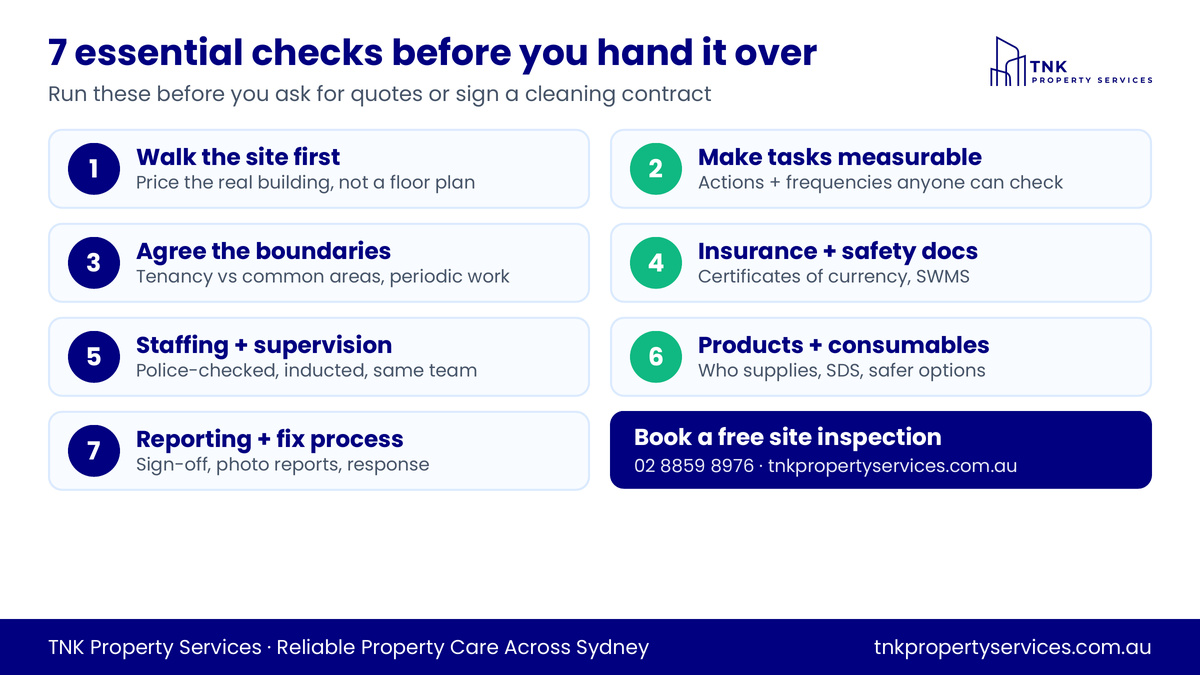
If you are comparing several contractors, ask each to price the same written commercial cleaning checklist. That is the only fair way to compare quotes line by line.
Turning the Checklist into a Contract and Records
Your commercial cleaning checklist works hardest when it becomes part of the contract. Attach it as the scope of works, and make sure the contract also covers:
- Service days, times and access arrangements
- How extra or one-off work is requested and approved
- How the scope is reviewed, for example after a fit-out or a change in headcount
- Reporting format and how often you meet or check in
- Notice periods and how handover works if the contract ends
Keep each signed-off commercial cleaning checklist, photo report and issue log together. They help you show that facilities are being maintained, and they make it far easier to spot a pattern, such as one bathroom that keeps generating complaints.
Cleaning is only part of keeping a building in good shape. Cleaners are often the first to notice a broken light, a leaking tap or a damaged door closer. Build a simple “report and fix” step into your checklist and link it to your strata and building maintenance provider. Outside, include gardens and grounds in the same plan so entries and paths stay presentable; regular garden maintenance keeps leaves and debris off paths and out of drains. For entries, car parks and bin bays, see our guide to strata pressure cleaning.
How TNK Can Help
TNK Property Services looks after strata, commercial and mixed-use buildings across Greater Sydney. Every site gets a written cleaning schedule, a dedicated team that learns the building wherever possible, and a single TNK contact. Our cleaners are police-checked, inducted on site safety and covered by our insurance, and our ISO 9001:2015 quality system means supervisors inspect work against your scope and issues are logged, fixed and followed up. We can clean early morning, after hours or on weekends, with 24/7 emergency response for urgent issues.
One local team can cover:
- Building and facility management: coordinating contractors, repairs and day-to-day care of your building
- Strata cleaning: lobbies, lifts, stairwells, car parks, bin rooms and shared facilities
- Strata maintenance: handyman repairs, pressure washing and general upkeep
- Garden maintenance: lawns, hedges, garden beds and grounds
- Commercial cleaning: offices, medical centres, schools, childcare, gyms and warehouses
- Office cleaning: daily, weekly or fortnightly cleaning done after hours
Want to see why businesses outsource this work? Read 5 reasons commercial cleaning services are essential.
Book a free site inspection. We will walk your building with you, agree the scope and frequency, and send a clear, itemised quote. Book a free site inspection or call 02 8859 8976.
Commercial Cleaning Checklist FAQs
What should be on a commercial cleaning checklist?
A commercial cleaning checklist should list every area of the building, the specific tasks in each area, how often each task is done, timing and access details, who supplies consumables, and how visits are signed off and issues fixed. Include easy-to-miss areas such as fire stairs, bin rooms and loading docks.
How often should a commercial building be cleaned?
Most offices and commercial buildings need bins, bathrooms, kitchens and high-touch points cleaned daily or at every visit, with dusting and full vacuuming weekly and deeper tasks monthly or quarterly. SafeWork NSW’s code says frequency should reflect the type of work, contamination risk, number of workers and type of facility, so busy or high-risk sites need more.
Is there a legal cleaning standard for workplaces in NSW?
There is no single prescribed schedule, but under NSW work health and safety laws a PCBU must, so far as is reasonably practicable, keep workplace facilities such as toilets, washing and eating areas clean, safe, accessible and in good working order. The SafeWork NSW code of practice on managing the work environment and facilities gives practical guidance.
Who is responsible for cleaning common areas in a commercial or strata building?
Usually the building owner, owners corporation or building manager arranges cleaning of common areas, while each tenant looks after their own tenancy. Check your lease, by-laws and contracts, and make the boundary clear in each cleaning scope.
Should I give contractors my own checklist or use theirs?
Start with your own commercial cleaning checklist so every contractor prices the same scope. A good contractor will then suggest changes after a site walk-through, such as adjusting frequencies or adding periodic work.
How do I check the cleaning is actually being done?
Ask for a signed-off commercial cleaning checklist, a logbook or photo reports after each visit, regular supervisor inspections and a simple way to report issues. Review the records at regular check-ins and adjust the scope when your building’s use changes.